
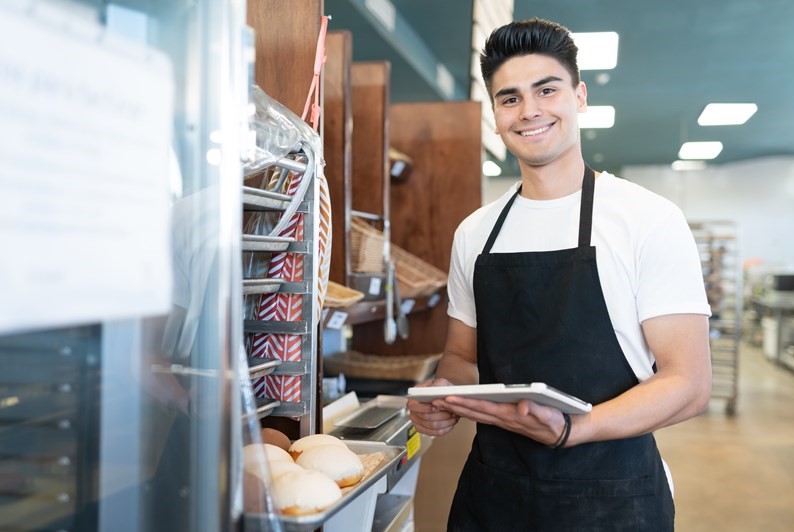
Using multiple systems to manage your business won’t take you to the next level. As lockdowns continue, the price of labour growing and food safety regulations changing, now isn’t the time for your business to waste hours of time on administration tasks that could have been automated.
We know too well how frustrating it is to enter data into multiple systems. It’s time consuming and there’s a high risk of error. Recent data released showed the average business spends up to 12 hours a week on manual data entry tasks. Think about it, you either need to employ someone to input data or you have to take a staff member off their normal job to complete these simple tasks. The impact on your business is enormous.
Automating your day-to-day tasks has never been more important for food and beverage distribution businesses. Automation will reduce your costs, increase your efficiency, and open your businesses doors for future growth.
What is Automation and how does it apply to my business?
Automation is defined as the use of technology to execute recurring daily tasks and processes in a situation where manual effort can be replaced.
The aim of automation is to streamline processes, increase efficiency and minimise overheads – giving businesses greater avenues for growth. When you implement a system to automate your repetitive tasks you will be able to reduce costs associated with that process.
In order to get the most benefit out of automation you need to evaluate where you in your business life cycle. What recurring tasks do you find yourself doing? What are the costs associated with completing those tasks?
Here are a few examples of everyday tasks that can be automated.
1. Receiving orders from a customer
If you find yourself taking orders vis phone, SMS or email, you will already know how complicated the process is. Using a food and beverage management system like EasyVend, you can automate ordering through an online ordering website. Using an online ordering website your customers can click and order products easily. After the order has been completed, the order will automatically populate the relevant areas in your system.
2. Chasing Debtors
Debtors are far and away the biggest frustration for all food and beverage businesses. With all the challenges faced in the industry you want to be sure that you are generating strong cashflow to help keep you operating.
Using a payment gateway food distribution businesses can completely automate their entire payments process. This will save you hours every week, minimise debt, increase cashflow and leverage future growth.
To learn more how a payment gateway can help your business click here.
3. Accounting integration
We’re with you! Accounting is a challenge. Many businesses find themselves wasting time filing away invoices, receipts, and overheads for their bookkeeper to complete. The problem with this is it increases the time it takes for your bookkeeper to complete the job.
Food and beverage management systems integrate with leading accounting package Xero. Integration with Xero is two-way which means when data is entered in one system the information is instantly transferred over to the other program. This is so beneficial, as it reduces the risks of error and reduces your bookkeepers’ fees.
4. Sending Invoices
The reason why many businesses grow debtors is because the invoice process. If a customer doesn’t get an invoice instantly, they won’t be enticed to pay. One of the benefits of a food and beverage management system is you can automate your invoicing process. The automated system can instantly generate an invoice once a customer places an order. The system will also instantly email the invoice to the customer for payment. This makes such a complex process simple.
In conclusion,
As the food and beverage distribution industry rapidly changes it is so important that you automate as many tasks as possible. Automating your day-to-day tasks through a food and beverage management software will increase your efficiency, reduce your overheads, and maximise your profit.
How Automation Directly Impacts Profit, Not Just Productivity
Automation gets praised for making work faster, but speed means nothing if your profit margins stay flat. The real value shows up when you track where automation actually saves money and how those savings compound over time. Here’s how automation in food and beverage industry moves beyond productivity gains to deliver measurable profit increases.
Cutting Labor Costs on Non-Value Work
Manual data entry is pure waste. Your staff types orders into multiple systems while you pay wages for work that creates zero customer value. When you automate food distribution processes, these repetitive tasks disappear. The hours saved translate directly into lower labor costs or freed-up time for revenue-generating activities.
Accelerating Cash Collection
Your staff spend hours calling customers about late payments and sending follow-up reminders. Business automation for food distributors eliminates this hassle through payment gateways. It sends invoice instantly when orders arrive and trigger automatic payment reminders. Money hits your account faster, improving cashflow to negotiate supplier discounts or seize market opportunities.
Eliminating Costly Errors
Wrong invoices, missed orders, and inventory miscounts all cost money to fix. Some mistakes lose customers permanently. Automated systems process every order identically, removing human error from routine operations. Each prevented mistake protects your profit margin.
About EasyVend
For food vendors and distributors, EasyVend supports and automates every part of your business, freeing you up to grow your sales unlike other ERP systems on the market that are designed more for wholesale supplier than for distribution businesses like yours.
EasyVend includes all your everyday tasks such as inventory management, invoicing, receipting, ordering, customer payments, online ordering – everything you need to manage your business seamlessly.
To learn more about EasyVend or to set up a Trial EasyVend call us today on 1300 473 744 or submit the form below.
FAQs
How does automation help food and beverage businesses increase profit?
Automation cuts labor costs on repetitive tasks and speeds up payment collection for better cash flow. It eliminates errors that waste money and these savings go straight to your profit margin.
What business processes should food distributors automate first?
Start with order receiving, invoice generation, and payment collection. These three processes have the biggest impact on cash flow and take the most manual time to complete daily.
Is automation expensive for small food distribution businesses?
Not anymore because modern systems are designed for small businesses with affordable monthly costs. The time you save on manual work usually covers the software cost within weeks.
How long does it take to see ROI from automation software?
Most food distributors see returns within 2 to 3 months. The exact timing depends on order volume, but faster payments and reduced labor costs add up quickly.
Can automation reduce errors in invoicing and payments?
Automated systems generate invoices from order data and send them instantly. This eliminates typos, missing invoices, and delayed billing that cause payment issues and customer disputes.FAQs
How does automation help food and beverage businesses increase profit?
Automation cuts labor costs on repetitive tasks and speeds up payment collection for better cash flow. It eliminates errors that waste money and these savings go straight to your profit margin.
What business processes should food distributors automate first?
Start with order receiving, invoice generation, and payment collection. These three processes have the biggest impact on cash flow and take the most manual time to complete daily.
Is automation expensive for small food distribution businesses?
Not anymore because modern systems are designed for small businesses with affordable monthly costs. The time you save on manual work usually covers the software cost within weeks.
How long does it take to see ROI from automation software?
Most food distributors see returns within 2 to 3 months. The exact timing depends on order volume, but faster payments and reduced labor costs add up quickly.
Can automation reduce errors in invoicing and payments?
Automated systems generate invoices from order data and send them instantly. This eliminates typos, missing invoices, and delayed billing that cause payment issues and customer disputes.