

There was a time when production lines relied solely on human hands and repetitive manual labour. But today, things have changed. Machines, robots, intelligent systems and many other technologies are working around the clock to simplify operations and reduce errors. This shift is powered by automatic manufacturing.
From the cars we drive to the food we eat, automated manufacturing is involved in everything around us. It has made modern life easier and more efficient. But what exactly is it, and why does it matter so much for businesses today?
In this guide, we’ll break down everything you need to know about automated manufacturing. You’ll discover the key technologies driving it and the main types of systems. You will also learn about its advantages for businesses and a real-world example in action.
What is Automatic Manufacturing?
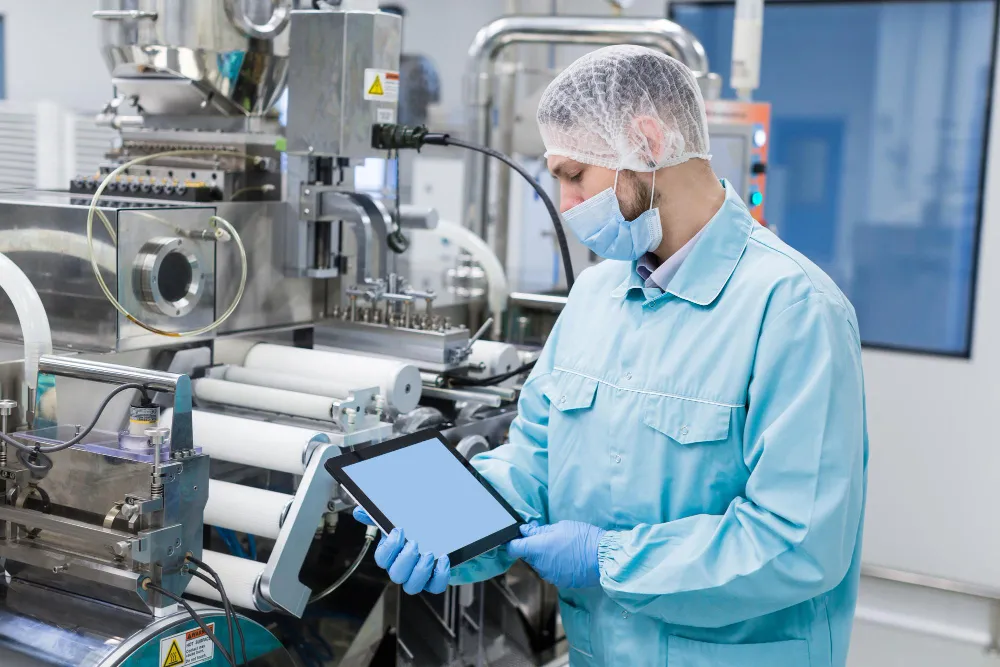
Automatic manufacturing refers to the use of computer-controlled systems, machines, and software that manage production tasks with little or no human effort.
Instead of relying on workers to handle every step, technology controls the processes and performs them faster and more accurately.
This approach can cover the entire workflow, including:
- Order Processing
- Stock Control
- Production
- Quality Checks
- Packaging
- Delivery
- Payments
Automation in manufacturing industry is not limited to big industrial plants. Small and mid-sized businesses are also increasingly adopting it to stay competitive in a fast-changing market.
3 Main Types of Automatic Manufacturing Systems
Automated manufacturing doesn’t look the same in every business. Depending on the product and scale, you can choose from three main types of systems:
- Fixed Automation (Hard Automation)
This system is best for high-volume production of the same item. Once the system is set up, it can produce the same product at high speed with minimal variation.
But as the equipment is specialised, making changes to the process is usually costly and time-consuming.
Example: Soft drink bottling lines or packaged snack production, where machines are built to perform one task, like filling or sealing, over and over again at incredible speed.
- Programmable Automation
Programmable automation offers more variety compared to fixed systems. It allows businesses to produce different batches by reprogramming the machines. While it takes longer to reset than fixed automation, it provides much greater flexibility.
Example: A bakery that uses programmable automation can switch from producing bread rolls to muffins without buying a completely new system. They can do it just by reconfiguring the equipment.
- Flexible Automation
Flexible automation combines the best of both worlds: the speed of fixed automation and the adaptability of programmable systems. Machines can switch between tasks with minimal effort or downtime.
Example: In electronics manufacturing, robotic systems can assemble different models of smartphones or circuit boards on the same production line. They do this without the need for major reprogramming.”
Key Technologies Powering Automated Manufacture
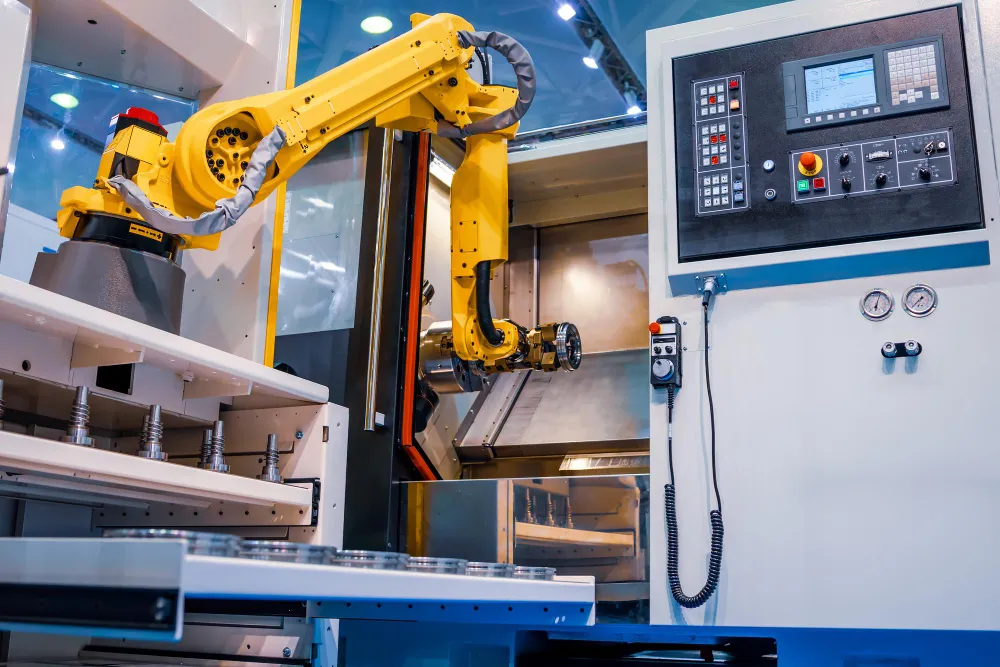
Now, let us look at the technologies that form the backbone of automation in manufacturing industry processes.
- Industrial Robots
These robots handle repetitive tasks like welding, assembly, packaging and material handling with great accuracy and consistency. In automotive factories, for instance, robotic arms can weld car frames or even paint vehicles, all at high speed without fatigue.
- CNC Machines
Computer Numerical Control (CNC) machines automate cutting, drilling, shaping and milling of materials like metal, wood, etc. They help manufacturers to create complex parts such as automotive parts or machinery components, with precision and repeatability.
- Artificial Intelligence & Machine Learning
AI analyses production data to predict maintenance needs. It improves quality control by spotting defects faster and more accurately than humans. It also optimises processes in real time by adjusting machine settings and streamlining workflows.
- IoT (Internet of Things)
IoT connects machines, sensors, and systems to create a fully connected factory. By providing real-time monitoring of equipment and workflows, it gives managers the data they need to make smarter and faster decisions on the factory floor.
- 3D Printing (Additive Manufacturing)
3D printing enables rapid prototyping and customisation. It is ideal for creating models and parts layer by layer without the need for expensive moulds. For example, medical companies use 3D printing to produce custom prosthetics and surgical models to provide patients with personalised and faster solutions.
Top Advantages of Automation in Manufacturing Industries
If you embrace automated manufacture, it can unlock huge advantages for your business. Let’s have a look at them:
- Higher Efficiency: Processes run faster with fewer delays. It can boost output without raising labour costs.
- Improved Accuracy: Automated systems reduce errors in stock counts, invoicing, and deliveries.
- Cost Savings: Automation helps cut waste and use materials more efficiently. It also has lower labour costs, all of which add up to bigger profits.
- Consistency and Quality: Products meet the same standard every time, which improves customer satisfaction.
- Better Safety: Machines handle hazardous tasks and protect workers from injury.
- Real-time Visibility: Managers can track inventory, deliveries, and payments through connected systems.
How to Get Started with Automatic Manufacturing: A Step-by-Step Guide
You might feel overwhelmed by the transition from manual to automated systems, but it doesn’t have to be. Follow this step-by-step guide to make the shift smooth and effective.
- Assess your Current Process
First, you need to map out where time and money are being lost. Focus on repeatable tasks like manual order entry and delivery management, and capture a few baseline metrics such as processing time, error rate, delivery lead time, and labour hours to measure improvement.
- Identify Quick Wins
Choose areas where automation will make an immediate difference, such as stock tracking or invoice generation.
- Select the Right Solution
Do not invest in complex tools you will not use. Look for platforms that are built for your industry and are easy to customise.
- Start Small, Then Expand
Begin with one or two functions. Once the team is comfortable and you’ve validated results, extend automation across more processes.
- Train Your Team
Automation works best when your team understands how to use it. So, provide them proper training and support.
- Work with Trusted Providers
Choose vendors that offer reliable support and proven results. Such support reduces downtime and makes adoption faster.
- Measure and iterate
Track KPIs (Key Performance Indicators) and collect user feedback. Then, refine the setup. Automation is an ongoing improvement process. Minor tweaks can deliver compounding benefits.
Real World Example of Automated Manufacturing in the Food Industry
Food production is one of the industries where automation is making the biggest impact. A great example of this in action is EasyVend.
Designed specifically for food and beverage suppliers, EasyVend is an all-in-one platform that handles the entire workflow from order to payment.
Customers can place orders online anytime, while stock updates automatically in the background. Invoices are generated instantly, and deliveries are tracked in real time through the MiniVend mobile app.
EasyVend also integrates with Xero and MYOB to ensure smooth accounting without duplicate entries.
The result is a business that operates more efficiently and delivers superior service.
The Future of Automation in the Manufacturing Industry
Looking ahead, automation will continue to reshape the manufacturing world. Technologies like AI and machine learning will become more advanced. Smart factories, powered by IoT and cloud systems, will give managers full visibility into every part of the supply chain.
Sustainability will also play a major role. Automation will help manufacturers reduce waste and meet growing environmental goals.
With trusted partners like EasyVend already offering cloud-based and mobile-first solutions, the path forward is clear. The next step is action. So, embrace automation today and prepare your business for growth.