
In today’s fast-moving global market, supply chains are becoming more complex and competitive than ever. Relying on traditional manual processes is no longer effective because they slow operations and limit business growth.
To tackle these challenges, automation is emerging as a key solution. By streamlining processes and improving real-time visibility, it addresses the inefficiencies that have long constrained businesses. Despite recognising its importance, many organisations have yet to fully embrace automation.
So, in this post, we’ll show how automation can help your business reduce inefficiencies and stay competitive in an increasingly complex supply chain landscape.
What Is B2B Supply Chain Management?
B2B supply chain management is all about managing the flow of goods, information, and payments between businesses. This includes sourcing materials, purchasing, planning production, storing inventory, shipping products, and processing invoices. It also covers returns when products arrive damaged or orders get mixed up.
B2B supply chains work differently from B2C ones. Instead of serving individual shoppers, they deal with bulk orders, repeat deliveries, negotiated contracts, and multiple parties working together..
How Automation Is Reshaping Every Corner of B2B Supply Chain
Automation takes over repetitive manual tasks and replaces them with consistent, rule-based workflows. Here are the main areas where automation creates immediate and noticeable results in the B2B supply chain:
1. Procurement and Sourcing
Procurement teams deal with supplier onboarding, price lists, contracts, purchase orders, and approvals every day. Handling all of this manually creates delays.
Automation speeds things up by sending approvals to the right people based on budget limits. It also places orders automatically when inventory drops or forecasts show upcoming demand. Plus, it checks prices against your contract terms to catch discrepancies.
For instance, when stock hits a preset minimum, the system generates a purchase order, confirms the current price, and notifies your supplier. It removes the need for manual data entry and catches pricing mistakes before they can impact your business.
2. Inventory and Warehouse Management
Automation has also changed how warehouses run. IoT sensors and barcode scanners track inventory as it moves through the supply chain. They update stock systems instantly without requiring anyone to manually enter data.
Australian beverage distributors are now using smart shelving that records when products move and automatically orders more when needed.
Predictive analytics takes this further by forecasting demand. It looks at seasonal patterns, sales history, and even weather to help you avoid ordering too much or running out of stock.
Robotics add another layer of efficiency. Automated Guided Vehicles (AGVs) move pallets and products around the warehouse safely. This cuts down on manual work and improves accuracy across operations.
3. Logistics and Transportation
Transportation used to rely on fixed routes and endless phone calls for updates. Automation has changed that. Smart routing tools now find the fastest routes and cut down on time and fuel costs.
Real-time tracking shows exactly where each vehicle is. This means you know when deliveries will arrive without having to guess. When drivers drop off goods, they capture electronic signatures or photos on the spot. This resolves delivery disputes and provides customers with peace of mind.
Automation also matches each shipment with the right carrier based on their capacity and speed. Customers receive automatic updates along the way instead of calling to ask where their order is.
4. Order Processing and Fulfilment
Order handling is one of the busiest parts of any supply chain. Automation streamlines this process by collecting orders from all channels and verifying them immediately. It spots missing information or wrong items before anyone starts working on them. This keeps fulfilment running smoothly.
Automation also connects with your CRM system to track customer interactions and sales. At the same time, it links to your ERP system, which manages inventory, finances, and daily operations.
When these systems work together, you get better efficiency and clearer insights to make smarter business decisions..
5. Data Analytics and Decision-Making
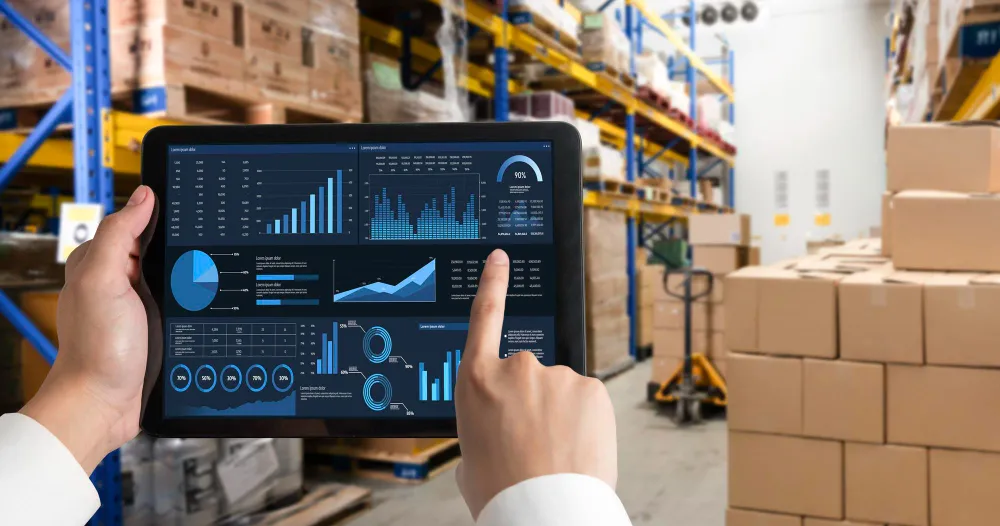
Automation collects data from every step of the supply chain, like orders, shipments, and inventory updates and updates it in real time. This gives leaders instant visibility to track performance and catch issues early.
Modern control tower dashboards consolidate all this data. They combine information from logistics, procurement, and finance into one clear view of your operations.
When these insights are connected across your systems through B2B system integration, you can manage cash flow and operational performance more effectively.
Automation in Action – A Real-World Example
A compelling example of automation in motion can be seen in EasyVend, a cloud-based B2B order and distribution management platform designed for the food and beverage industry. It shows how automation simplifies and strengthens modern B2B supply chain management.
The platform connects every stage of operations, including orders, inventory, deliveries, invoicing, and payments through one integrated dashboard.
Orders from customer portals, mobile apps, or EDI systems flow automatically into the platform. Automated invoicing and payment processing speed up cash flow, while the MiniVend mobile app enables drivers to record deliveries and update information in real-time.
With built-in accounting integrations like Xero and MYOB, EasyVend keeps financial and operational data synchronised and gives businesses complete visibility and control. The result is faster fulfilment and a supply chain that works more smoothly.
Conclusion
To sum up, automation is reshaping B2B supply chain management in real and measurable ways. By connecting systems, data, and partners, automation enables the creation of more accurate and manageable operations.
Businesses that embrace automation today gain greater control and performance at every stage of their operations.
As technology continues to advance, one question remains: just how far can automation take B2B supply chains?