
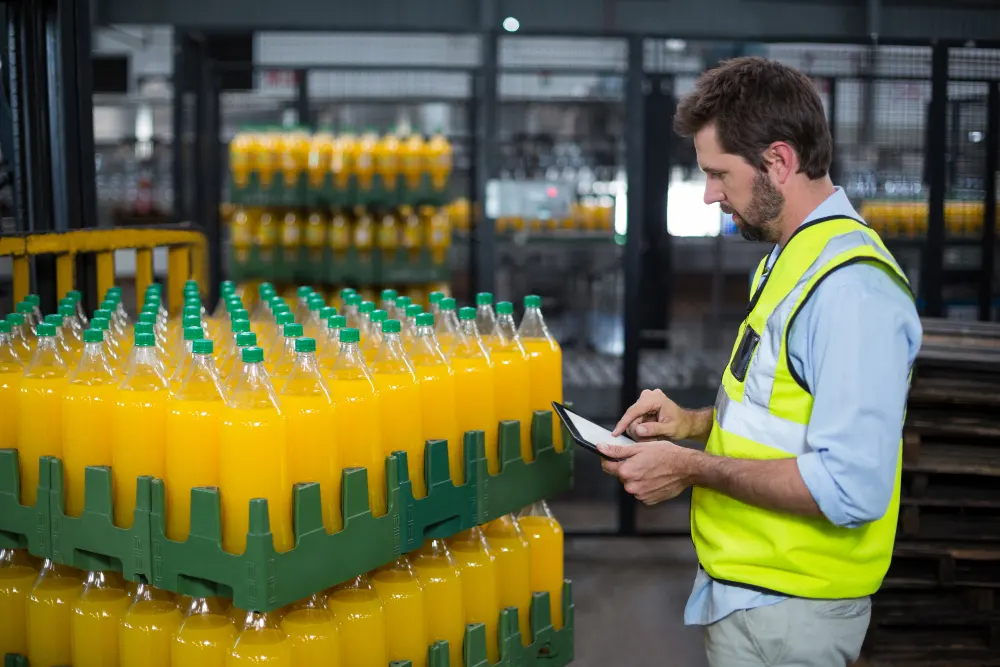
If you are in the beverage industry, you know the daily grind: managing products with short shelf lives, keeping track of keg and bottle deposits, and making sure the right products are loaded onto the right truck.
Most of us start managing this all with a mix of spreadsheets and paper notes. It works for a small business, but as your customer list grows and your product line becomes more complex, these manual methods become a major headache.
A dedicated beverage order management system is the key to finally breaking through that ceiling. In this guide, we’ll break down exactly how beverage order management works and help you figure out if it’s the right move for your specific setup.
Key Takeaways
- Order Intake: Whether from a sales rep in the field or an online portal, all orders land in one central spot.
- Validation: The system instantly checks stock levels, credit limits, and pricing.
- Stock Allocation: Items are reserved the moment an order is confirmed, so you never oversell.
- Logistics: The software builds your delivery routes and tells the crew exactly how to load the trucks.
- Delivery: Drivers use mobile tools to confirm the drop-off and log any site-specific notes.
- Payment: The invoice triggers as soon as the delivery is signed, keeping your books accurate.
- Reporting: You stop guessing and get real data on what is selling and which routes are actually profitable.
What Is Beverage Order Management?

Beverage order management is the complete workflow that connects a customer’s order to your final payment. It is the process of capturing, tracking, and fulfilling product requests while managing the specific complexities of the beverage industry—like bottle deposits, expiration dates, and fragile goods.
When you use a dedicated system, it becomes the single source of truth for your entire business. By giving your warehouse staff, sales reps, and finance team access to the same real-time data, you gain the clarity needed to run your operation with foresight.
How Beverage Order Management Differs From General Order Management
Many distributors make the mistake of using standard retail software for beverages. General retail systems are built for shipping individual parcels via courier, which is not how your warehouse works.
You need beverage-specific order management to handle the unique demands of the industry:
- Complex Counting: You need to track layers, pallets, cases, and singles. If your software does not do that math for you, your team is wasting hours doing it manually.
- Managing Your Returnables: General retail software has no idea how to track a keg that needs to come back. You need a system that treats these as returnable assets, not just inventory.
- Keeping Your Stock Fresh: Many general order management systems do not include industry-specific inventory rotation rules such as first-expiry, first-out (FEFO), which beverage distributors often require. In the beverage world, you have to ship the oldest stock first. If your system is not enforcing that rotation, you are losing money to spoilage.
- Route Logistics: Standard software does not handle multi-stop delivery routes. Beverage software is built for sequence, weight limits, and driver efficiency.
How Beverage Order Management Works: Step-by-Step Process
Here’s exactly how an order moves through your business when you’ve finally replaced the guesswork with a reliable, automated system:
1. Receiving Customer Orders
This is the first step in the beverage order management process. Whether your sales reps enter requests through an app or your customers log them via a portal, everything lands in one central dashboard. Your staff does not need to enter data manually and can focus on actual customer service.
2. Validating and Processing Orders
After an order is submitted, the system verifies key details before moving it to fulfilment. It does the heavy lifting for you by checking that the customer is clear to pay and confirming that the items are actually sitting on your warehouse shelf.
This simple safety check saves you from the headache of promising a delivery you can’t fulfil.
3. Managing Inventory and Stock Allocation
The moment an order is confirmed, the order management system immediately marks that specific stock as “picked” or “pending” in the warehouse.
No internal confusion is left on the floor as everyone knows what is still available to sell versus what is already set aside.
4. Planning Deliveries and Dispatch
Next, the software handles route planning automatically. Instead of manually selecting delivery routes, it calculates efficient delivery sequences based on location, capacity, and scheduling requirements.
5. Delivering Orders to Customers
Once deliveries are underway, drivers can update order statuses in real time using mobile tools. With mobile tools, your drivers can confirm the drop, log any discrepancies—like missing empty kegs—and update the status instantly.
6. Generating Invoices and Managing Payments
As soon as the delivery is signed for, the invoice is generated right there on the spot. You aren’t chasing paperwork at the end of the week or waiting around to get paid. It happens automatically, which drastically speeds up your cash flow and keeps your books clean.
7. Reporting and Performance Monitoring
Finally, this is where the real value hides. When you have actual data from your beverage management software, it takes the guesswork out of which customers are profitable and which ones are just costing you time. It becomes clear which routes make sense and which ones you should drop.
Why More Distributors Are Investing in Beverage Inventory and Order Management Solutions
The beverage industry runs on thin margins. If you are not efficient, you are losing money on every case you ship.
Distributors are moving to automated systems simply because manual errors have become too expensive to ignore.
When processes are automated and inventory data stays accurate, distributors can:
- Process more orders without increasing headcount
- Reduce fulfillment errors
- Improve delivery performance
- Increase operational visibility
- Scale more efficiently
Conclusion
Think of the right software as the engine that handles all the heavy lifting for you from tracking tricky inventory to getting those invoices and deliveries out the door automatically.
Building a smarter process is about having a clear picture of what’s happening every single day.
If you’re tired of juggling fragmented data and want a system that actually stays in sync, it’s time to move past the manual grind. With trusted platforms like EasyVend, you get the tools to keep everything accurate, organised, and running exactly the way you need it to.
FAQs
Is beverage order processing software suitable for small and growing beverage distributors?
Yes, absolutely. Small distributors actually have less room for error, and getting a reliable system in place early means you can grow without the typical growing pains or manual headaches.
How does beverage order processing software support customer service?
When a customer calls, you don’t have to put them on hold while you scramble through paper files or separate spreadsheets. You can pull up their current order status, past invoices, and delivery history in a few seconds. It becomes easy to trust your team, and in an industry built on relationships, that reliability is exactly what keeps customers coming back to you.
How does beverage inventory and order management support seasonal demand fluctuations?
It takes the guesswork out of your busiest times of the year. Whether it is a summer rush or a holiday spike, the system gives you a real-time view of exactly what is in your warehouse. You will not accidentally promise stock you cannot ship, which keeps your reputation intact.