
Are you a dairy supplier using Excel or Google Sheets to track deliveries? Or, maybe you run a growing food and beverage business, managing order records in spreadsheets. If so, you might be noticing that things are getting messy over time. At the beginning, it feels easy and cost-effective to rely on sheets.
However, as your company grows and receives orders from multiple sales channels, spreadsheets quickly become harder to manage. This is where an online order management system comes in handy. It enables you to streamline everything from order receiving and processing to delivery planning and stock updates.
You may be wondering how order management software works. Let’s learn in detail about how digital order systems can replace hectic manual data management and make your workflows smoother.
What Is The Difference Between Online Order System and Spreadsheets?

Before we move to the exact factors that make an online order system capable of replacing spreadsheets, let’s first have a quick intro to both.
Digital Order Management Software
A digital order system acts as an all-in-one solution for businesses. It handles orders, tracks inventory, records deliveries, and manages sales in a single platform. Manual work decreases, and operations become more efficient.
Spreadsheets
Spreadsheets function as digital ledgers arranged in rows and columns. Users type values, apply formulas, organize data, and calculate totals. The process relies entirely on manual input.
Online Order System vs Spreadsheets: Which Fits Growth?
As your distribution business grows and orders come from multiple channels like email, phone, and sales representatives, you need a system that handles high volumes efficiently.
Here is how digital order management software compares to spreadsheets in real-world business scenarios.
Data Collection Efficiency
If you are using a spreadsheet, you need to enter everything manually when collecting and storing order data. For instance, if you run a bakery and receive dozens of orders every day from different mediums, you or your staff must spend hours typing each order into the sheet. This manual hassle directly impacts your work efficiency, which can be a big problem.
An online ordering system, on the other hand, automates the entire process and reduces the time and effort spent on data collection. Here is exactly how it works to improve your productivity:
- The customer places orders directly through the online portal.
- All order details automatically appear in the central dashboard.
- You pack the product, plan the delivery, and send it to the customer.
Risk of Errors in Data
Manual data entry increases the likelihood of mistakes such as incorrect order quantities, wrong customer details, or misplaced pricing information. Dedicated order management software records and processes data automatically, which significantly reduces these errors.
As a business owner, you know that even a single incorrect number can affect
- Stock counts
- Deliveries
- Invoices
- Order quantities
- Payment records
Even a small discrepancy can disturb the order process, leading to late deliveries or stock shortages. That’s why you need to ditch manual tracking order software like spreadsheets and upgrade to modern ordering software that meets your business needs.
Order Tracking and Visibility
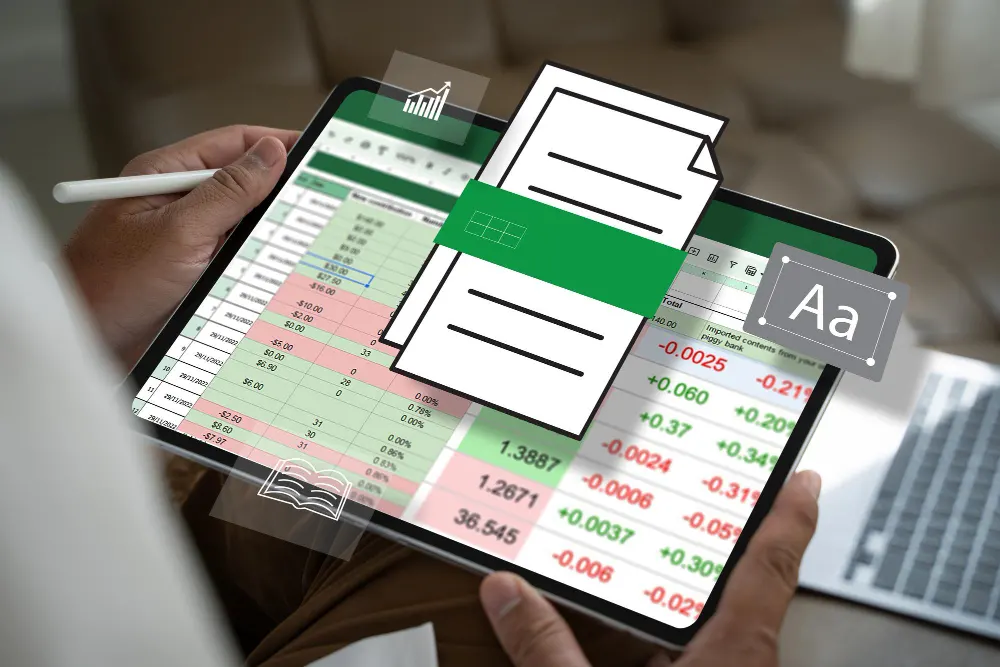
Order tracking is an integral part of local distributor workflows, and spreadsheets may make it worse than you think. When dealing with bulk orders, you need to dig into messy rows to determine which ones are new, in progress, or already shipped. With slow or late visibility, it becomes difficult to answer customer questions such as:
- Has my order been processed?
- When will my delivery arrive?
- Has the invoice been issued?
But in an online OMS (order management system), each order has a visible status in the dashboard. You and everyone from the staff can see the ongoing, processed, and delivered orders. This visibility allows you to track catalogue orders promptly and enables you to provide the best customer service on your end.
Inventory or Stock Control
As your business grows, managing your inventory becomes as important as processing orders. With low stock levels, you cannot meet customer demand on time, hurting your relationship with potential buyers. Similarly, with overstocking, you can tie up cash in products that may expire or remain unsold.
With an online order system, you have a clear view of available stock in real time. Your inventory updates automatically with each order, allowing you to plan when and what to restock so your orders keep flowing smoothly.
On the other hand, spreadsheets require manual updates every time an order is processed or stock is received. That means you risk running out of stock if the sheet is not updated promptly.
Multi-Channel Sales Handling
When your company expands, you no longer sell your products through only calls or messages. Instead, you start receiving orders from multiple sales channels, including
- Emails
- Website
- Ads
- Sales Reps
- Ordering apps
Managing all these orders in spreadsheets feels like you are constantly juggling multiple files. From entering the data collected from the customer to making sure that the order is processed and delivered, every step requires manual effort.
However, a digital OMS centralises orders from all channels in a single dashboard. It provides quick insights into every stage of order processing. The system provides a single reliable source to manage operations. It also allows you to track catalogue orders and oversee sales across all channels with greater clarity and control.
Potential of Scalability
One of the major problems with spreadsheets is that their ability to scale with the business is very limited. While you can create as many or as large sheets as you want, things become messy as soon as their size or number increases. Ultimately, you face problems like:
- Lost information
- Duplicated entries
- Slow processing
On the contrary, online order management software can easily handle large-volume orders and multiple product catalogues. By adding new product lines and locations, you can scale your business without major interruptions. That’s what makes it necessary to ditch manual tracking order software and rely on an automated one.
Automation of Repeated Tasks
With everything on spreadsheets, you need to do the same task multiple times, even for minor changes. For example, if you run a bottled water company, every time an order is updated or a delivery is completed, you must manually adjust:
- Stock counts
- Create invoices
- Update payment records
These repeated entries and checks consume time and energy. As a result, you process fewer orders compared with what an automated system can handle. At the same time, an online OMS brings advanced capabilities to work to perform all such small changes on its own. That means you can focus more on customer satisfaction and other important aspects than on data entry and tracking.
Data Safety and Backup
Another way a digital order management system replaces spreadsheets lies in stronger data security and dependable backup. Spreadsheets store order, customer, and inventory information on a single computer or shared drive. This setup increases the risk of accidental deletion or file corruption. A hard drive failure can also result in the loss of critical business data.
Fortunately, that’s not the case at all with an automated OMS. An automated order management system stores orders, payment records, and related business data securely in the cloud with scheduled automatic backups.
Cloud storage allows you to access business information at any time, even if a computer stops working or local files are deleted. Secure backup systems protect order records and financial data, which helps maintain consistent and reliable business operations.
Reporting and Data Analysis
Growing businesses, especially in the food and beverage industries, need clear information to know how the company is performing. When working on spreadsheets, you need to manually prepare reports by sorting data and applying formulas accurately. Even a small error in calculations can lead to misleading insights that significantly affect your decision-making.
Digital order systems address this challenge by automatically generating various reports, including a mega overview. From the number of orders received and delivered to total generated revenue and stock levels, everything is displayed clearly. In fact, some reliable OMS systems also provide insights into customer behaviour in a few clicks.
Online Order System vs Spreadsheets- A Quick Comparison
Here’s a more concise comparison table for a quick comparison:
| Feature | Spreadsheets | Online OMS |
| Data Entry | Manual; time-consuming | Automated; instant |
| Errors | High risk of mistakes | Minimal; auto-validated |
| Order Tracking | Hard to track; manual updates | Real-time status in the dashboard |
| Inventory | Manual updates; stock errors likely | Auto-updated; accurate stock levels |
| Multi-Channel Sales | Juggling multiple files | Centralised dashboard for all channels |
| Scalability | Limited; messy with growth | Handles large volumes, new products, and locations easily |
| Repeated Tasks | Manual; drains time | Automated updates for stock, invoices, and payments |
| Data Safety | Local or shared drives; risk of loss | Secure cloud storage with auto-backups |
| Reporting | Manual; error-prone | Automatic reports and analytics |
Final Verdict
In a nutshell, spreadsheets are useful for business as long as order volume and inventory remain small. They are helpful only when operations are limited, and order processing or record-keeping is easier to handle manually. As the number of orders and stock levels increase over time, they fail to manage complex distribution operations.
At that stage, online order software becomes the best option. It allows you to efficiently and more accurately manage your growing company’s distribution workflows. Fortunately, we have built an amazing automated digital ordering system at EasyVend, specifically designed for Australian food and beverage distributors.
EasyVend combines orders, inventory, deliveries, and payments in a single dashboard. Also, it provides real-time stock updates and supports automated invoicing. The good news is that you can try the system with a free demo to see how it can replace your current sheets. So, take your growing business to the next level by managing everything from one place.